Lab · 09
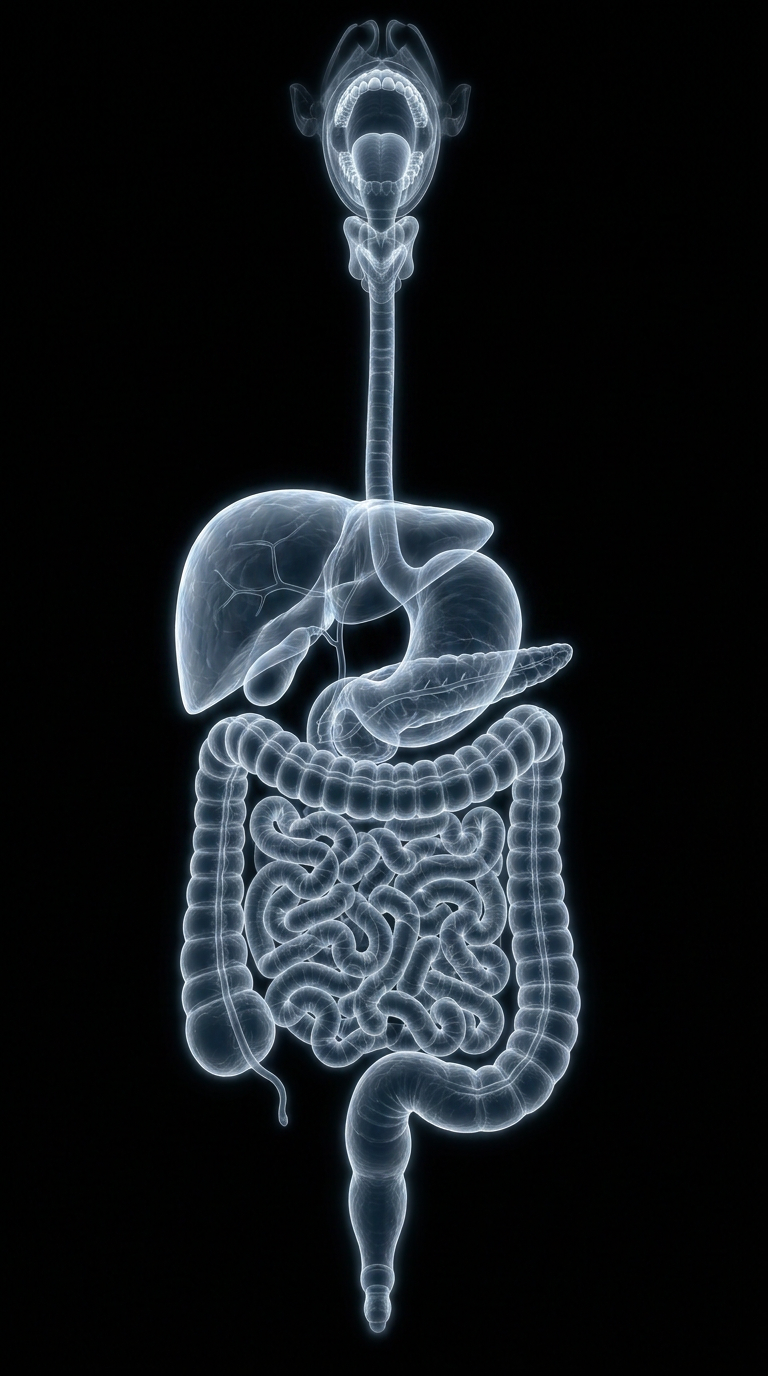
Anus
The opening at the end of the digestive tract, where a rare, often treatable cancer is rising.
Quick facts
Rare
But under-reported in India
HPV
Linked to most cases
Rising
With HPV & HIV prevalence
Overview
- Anal cancer develops in the tissue of the anus, the opening at the end of the digestive tract.
- Most anal cancers are squamous cell carcinomas and are strongly linked to HPV infection. Other risk factors include a weakened immune system, a history of cervical or vaginal cancer, smoking, and a history of receptive anal intercourse.
- A diagnosis means abnormal cells are growing in the anal tissue; anal cancer is often highly treatable, particularly when found early.
01Risk factors
- Human papillomavirus (HPV) infection
- Weakened immune system, including HIV
- History of cervical, vaginal, or vulvar cancer
- Smoking
- History of receptive anal intercourse
02Signs & symptoms
- Rectal bleeding
- Anal itching or pain
- A lump or mass near the anus
- A change in bowel habits
- Mucus discharge from the anus
- Swollen lymph nodes in the groin or anal area
- A feeling of a lump or fullness in the anal canal
03Screening & diagnosis
- Digital rectal exam to feel for lumps
- Anoscopy or high-resolution anoscopy to inspect the tissue
- Biopsy of any suspicious area
- Anal Pap/cytology for high-risk individuals (e.g., HIV-positive)
04Treatment
- Chemoradiation, the standard first-line therapy
- Surgery reserved for cases that don't respond or recur
- HPV vaccination to prevent future cancers
- Close follow-up to detect recurrence early
05Surgical procedures & operations
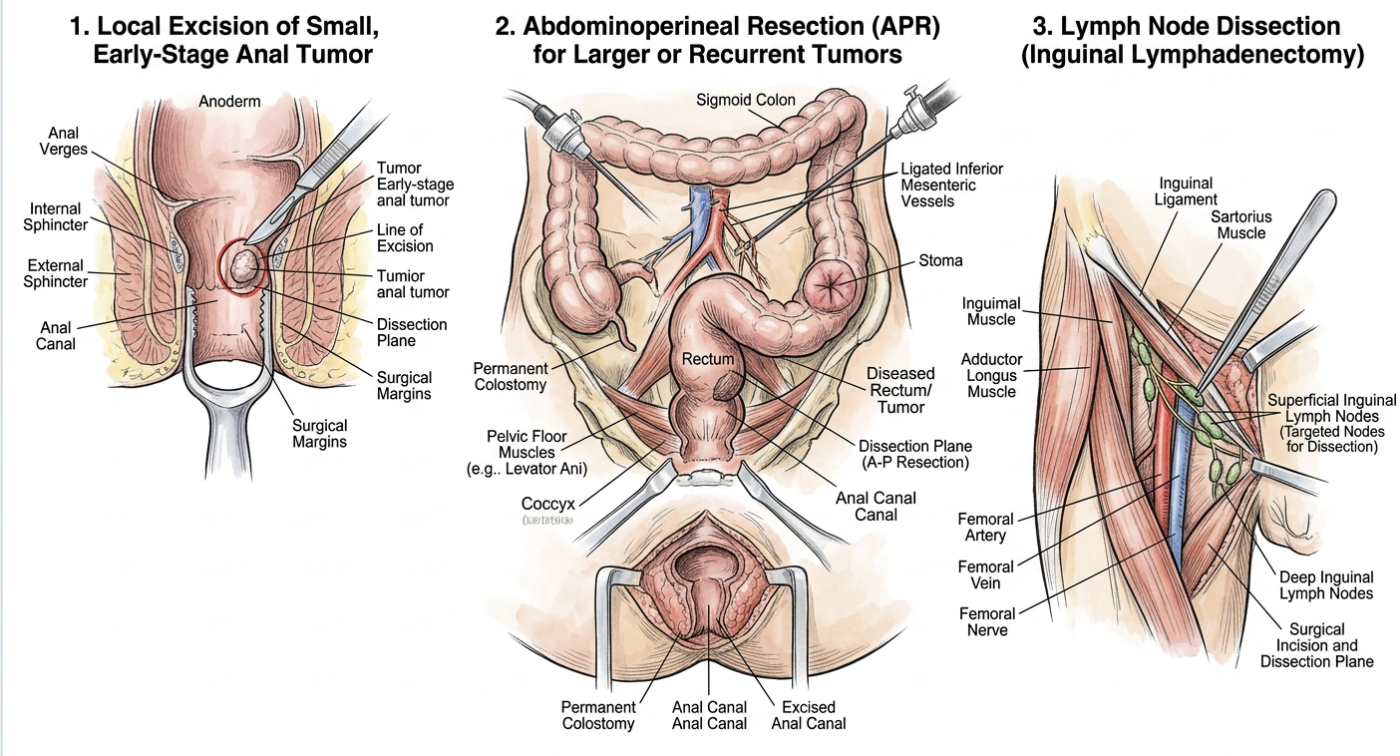
- Local (Wide) Excision, removes small, early-stage, superficial anal tumors with a margin of healthy tissue
- Abdominoperineal Resection (APR), removes the anus, rectum, and part of the sigmoid colon; typically reserved as "salvage surgery" for tumors that persist or return after chemoradiation, since chemoradiation (not surgery) is usually the first-line treatment for anal cancer
- Diverting Colostomy, creates an opening for stool to bypass the anus, sometimes needed before or after treatment, especially with APR
- Note: Unlike most other GI cancers, anal cancer is most often treated first with chemotherapy and radiation therapy (combined modality treatment) rather than surgery. Surgery is generally reserved for tumors that don't respond or that recur.
06What you can do at home
- Ask your doctor about the HPV vaccine, which significantly lowers risk of anal cancer
- Practice safe sex to reduce HPV transmission risk
- Avoid smoking
- If you're immunocompromised (including from HIV) or have a history of HPV-related cancers, ask your doctor about anal Pap smear screening
- Don't assume anal bleeding, itching, or a lump is automatically hemorrhoids. Have persistent symptoms evaluated by a doctor
- Practice good anal hygiene
- Track symptoms that last more than a couple of weeks and bring them up with a healthcare provider rather than self-treating
Research at GutLiv
GutLiv champions HPV vaccination equity and screening for high-risk groups, aiming to prevent anal cancer before it ever starts.