Lab · 04
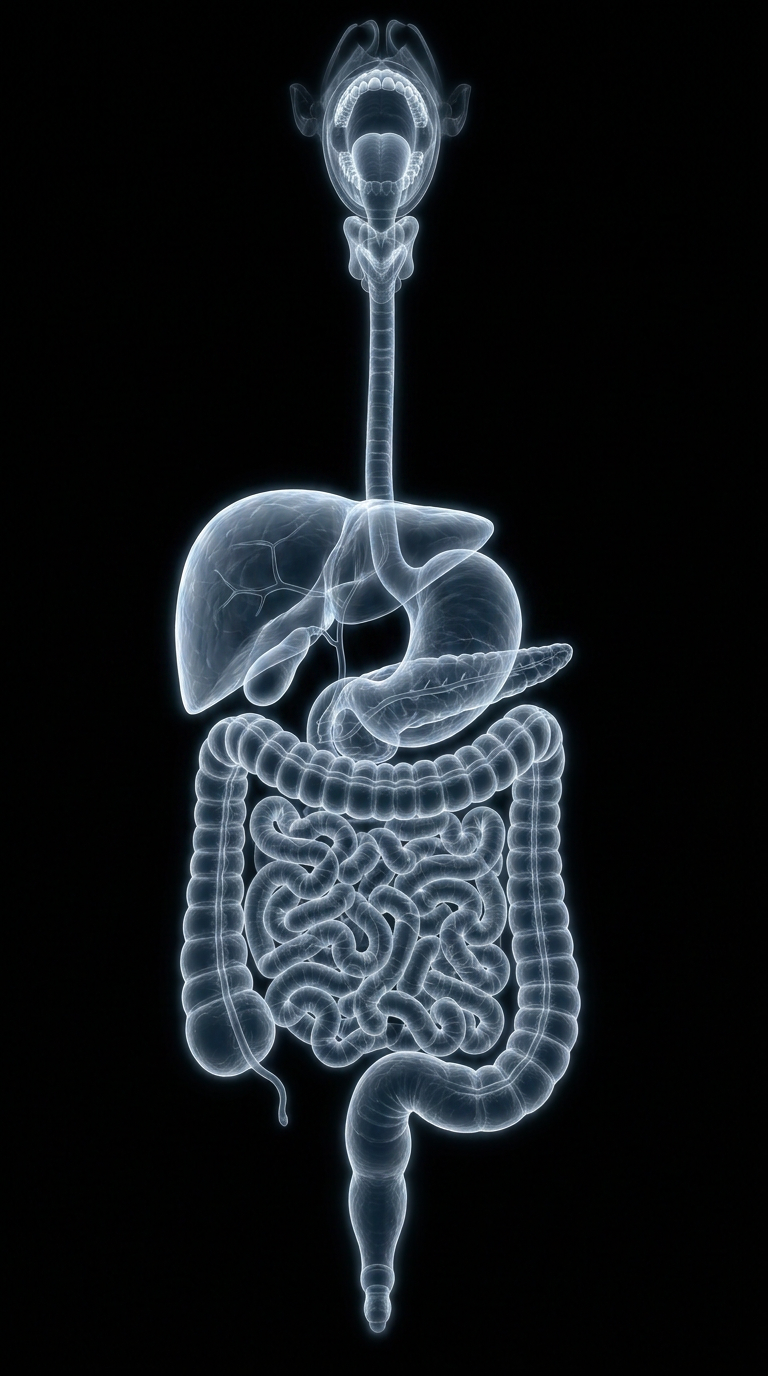
Gallbladder
A small sac that concentrates bile, where a rare, aggressive cancer can hide.
Quick facts
~20,000
New India cases yearly (est.)
Highest
Global rates in the Gangetic belt
Female
More common in women
Overview
- The gallbladder is a small organ under the liver that stores bile used to digest fat. Gallbladder cancer usually starts as adenocarcinoma in the gallbladder's inner lining.
- It is uncommon but is linked to long-term gallstones, chronic gallbladder inflammation, gallbladder polyps, and certain infections of the bile ducts.
- A diagnosis means abnormal cells are found in the gallbladder; because the gallbladder is small and tucked under the liver, and because early symptoms overlap heavily with gallstones, gallbladder cancer is often found unexpectedly during gallbladder removal surgery for other reasons, or at a later stage: making attention to persistent symptoms important.
01Risk factors
- Long-standing gallstones and chronic gallbladder inflammation
- Gallbladder polyps, especially when large
- Chronic infection of the bile ducts
- Obesity and older age
- Certain ethnic populations and regions with high gallstone rates
02Signs & symptoms
- Abdominal pain, usually in the upper right side
- Nausea and vomiting
- Bloating
- Loss of appetite
- Unexplained weight loss
- Yellowing of the skin or eyes (jaundice)
- A lump in the abdomen
- Fever
03Screening & diagnosis
- Abdominal ultrasound to evaluate the gallbladder wall
- CT or MRI to assess extent and possible spread
- MRCP to image the bile ducts in detail
- Often discovered incidentally during cholecystectomy
04Treatment
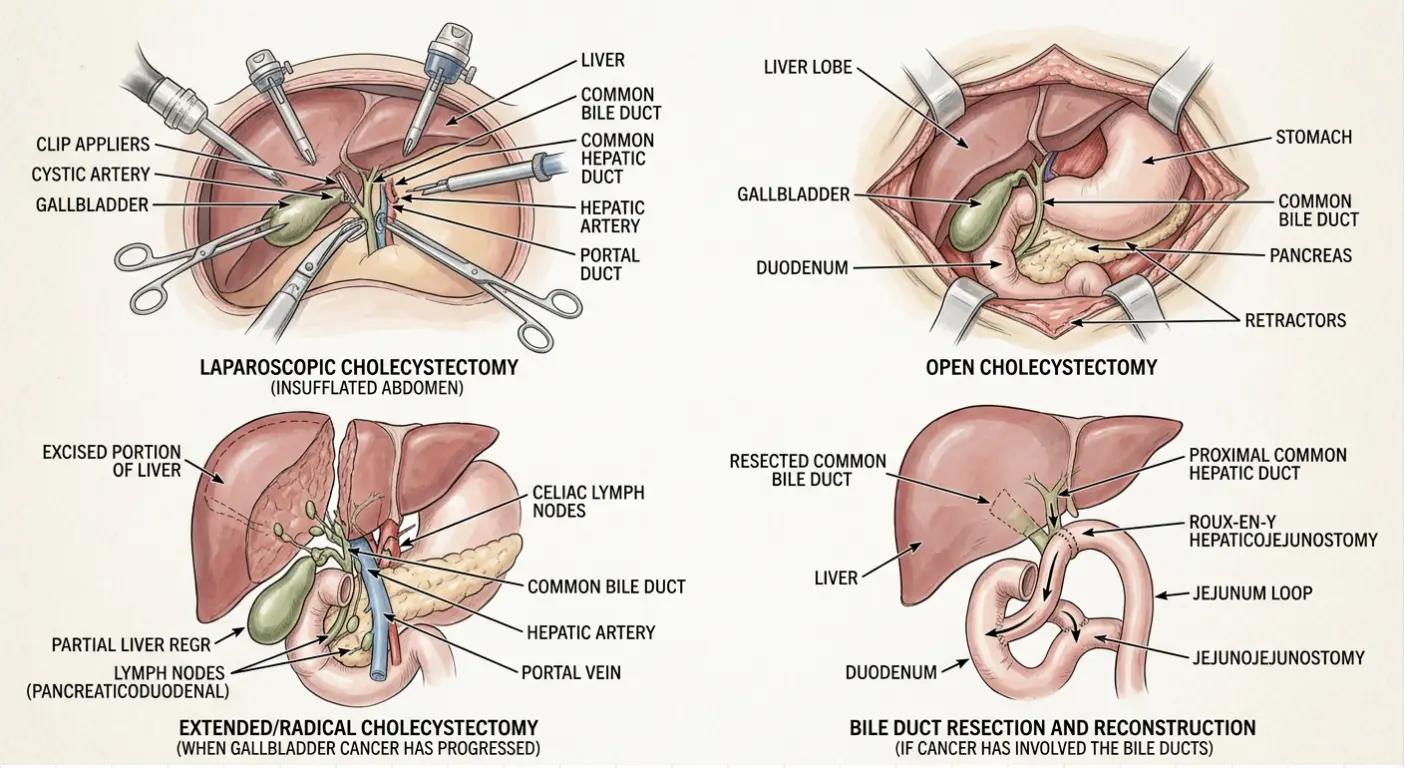
- Surgical removal of the gallbladder (cholecystectomy)
- Extended resection of liver and lymph nodes for more advanced cases
- Chemotherapy, often combined with radiation
- Palliative stenting to relieve bile-duct blockage
05Surgical procedures & operations
- Simple Cholecystectomy, removes the gallbladder alone, usually via laparoscopic technique; used for very early-stage cancer (often found incidentally during surgery for gallstones)
- Radical (Extended) Cholecystectomy, removes the gallbladder along with a portion of the adjacent liver and nearby lymph nodes, used when cancer has grown beyond the gallbladder wall
- Bile Duct Resection, removes part of the bile duct if the cancer has spread there, often performed alongside radical cholecystectomy, with bile flow reconstructed afterward
- Laparoscopic or Robotic-Assisted Cholecystectomy, minimally invasive removal of the gallbladder
- Biliary Bypass, reroutes bile flow around a blockage; typically palliative for unresectable tumors
- Biliary Stenting, places a small tube to relieve a blocked bile duct; minimally invasive and typically palliative
06What you can do at home
- If you have gallstones, discuss with your doctor whether they need treatment, especially if you have symptoms, most gallstones are harmless, but chronic irritation over many years is a risk factor
- Follow up on any gallbladder polyps found on imaging, as your doctor may recommend monitoring or removal depending on size
- Maintain a healthy weight, since obesity increases the risk of gallstones and gallbladder disease
- Eat a balanced, high-fiber diet and limit high-fat, processed foods
- Avoid tobacco
- Don't dismiss recurring upper-right abdominal pain, especially if it's changing, worsening, or comes with jaundice, have it evaluated rather than assuming it's routine gallstone pain
- Keep up with any recommended follow-up imaging if you have chronic gallbladder inflammation or gallstones
Research at GutLiv
GutLiv investigates imaging markers that distinguish high-risk gallbladder polyps from benign ones, aiming to make preventive removal decisions clearer before cancer develops.