Lab · 05
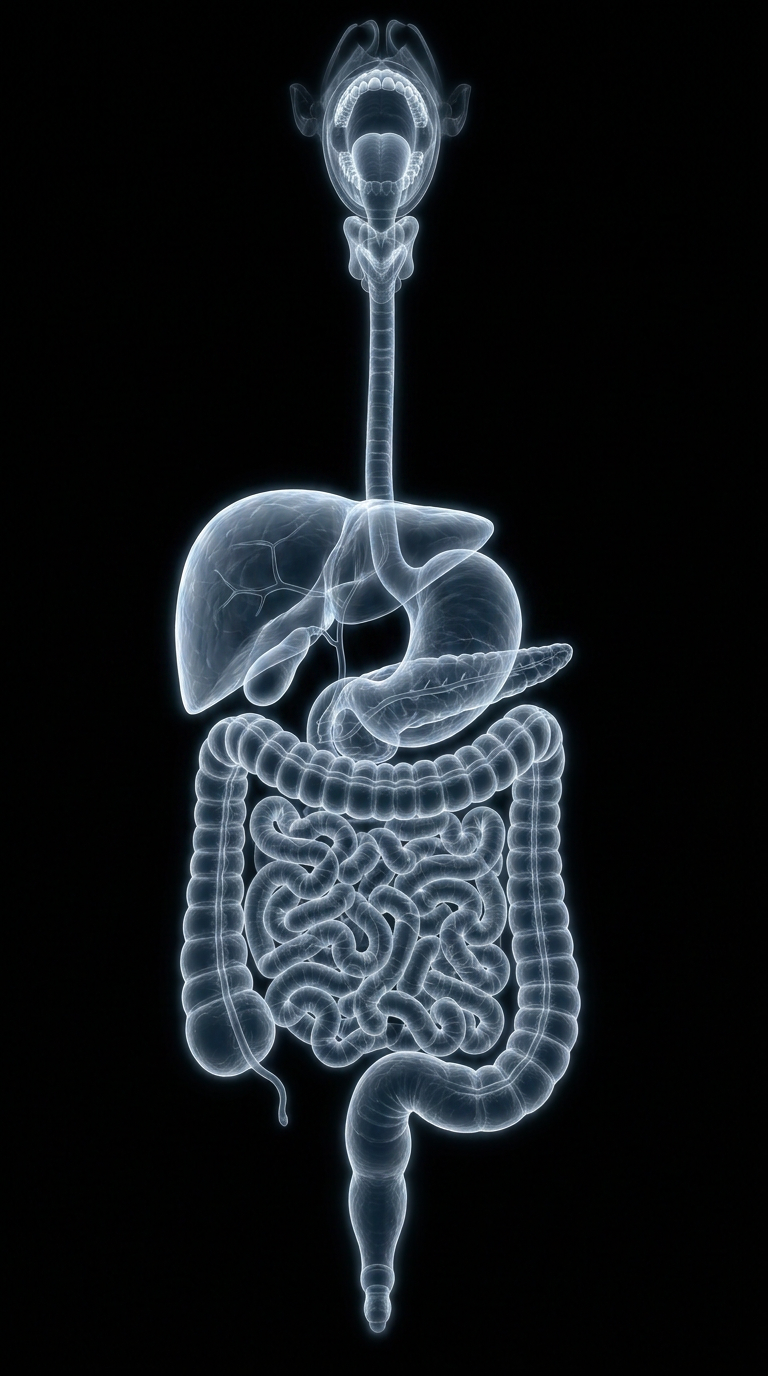
Pancreas
An endocrine and exocrine powerhouse tucked behind the stomach, with one of the toughest cancers to catch early.
Quick facts
~15,000
New India cases yearly (est.)
Lowest
Survival rate of major cancers
Rising
With diabetes & obesity in India
Overview
- The pancreas is an organ behind the stomach that produces digestive enzymes and hormones like insulin. Most pancreatic cancers are adenocarcinomas that start in the ducts carrying digestive enzymes.
- Risk factors include smoking, chronic pancreatitis, long-standing diabetes, obesity, a diet high in red/processed meat, and inherited genetic syndromes or family history.
- A diagnosis means abnormal cells are growing in the pancreas; because the pancreas sits deep in the abdomen and early tumors often cause few or vague symptoms, pancreatic cancer is frequently found at a later stage, which is why awareness of subtle warning signs and prompt evaluation matter.
01Risk factors
- Smoking, the leading modifiable risk
- Chronic pancreatitis and long-standing diabetes
- Obesity and a diet high in red or processed meats
- Inherited syndromes (e.g., BRCA mutations, Lynch, Peutz-Jeghers)
- Older age and family history of pancreatic cancer
02Signs & symptoms
- Upper abdominal pain that may spread to the back
- Unexplained weight loss
- Loss of appetite
- Yellowing of the skin or eyes (jaundice), often with dark urine and pale stools
- New-onset diabetes or a sudden worsening of existing diabetes
- Nausea and vomiting
- Fatigue
- Blood clots (sometimes an early clue)
- Digestive difficulties, including oily or floating stools
03Screening & diagnosis
- Pancreatic-protocol CT or MRI to image a suspected mass
- Endoscopic ultrasound (EUS) with fine-needle biopsy
- MRCP to evaluate the pancreatic and bile ducts
- Targeted surveillance for people with inherited high-risk syndromes
04Treatment
- Surgery (Whipple procedure) for tumors that can be removed
- Chemotherapy before or after surgery
- Radiation therapy, often combined with chemo
- Palliative care to relieve bile-duct obstruction and pain
05Surgical procedures & operations
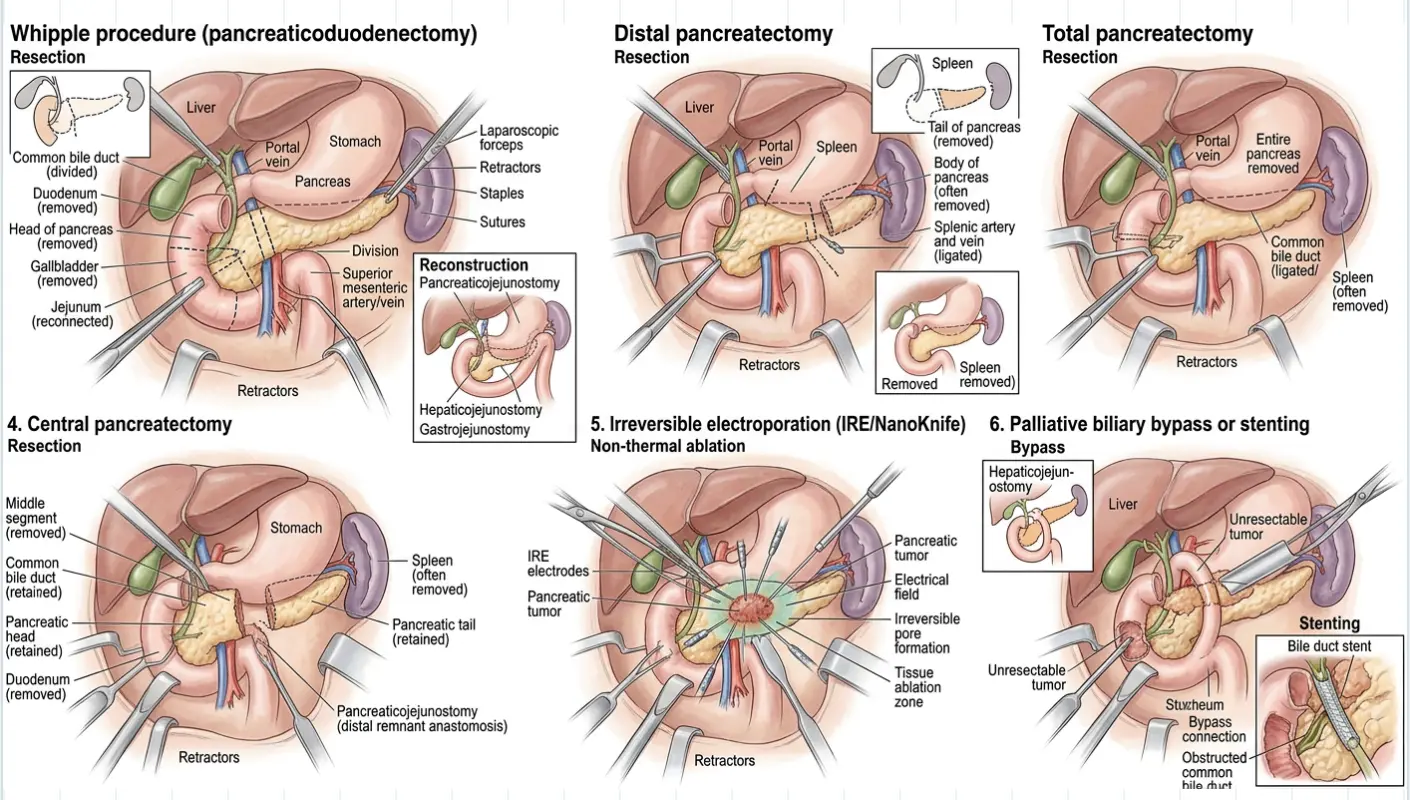
- Pancreaticoduodenectomy (Whipple Procedure), removes the head of the pancreas, part of the small intestine, the gallbladder, and part of the bile duct, used for tumors in the pancreatic head
- Pylorus-Preserving Pancreaticoduodenectomy, a variation of the Whipple procedure that preserves the stomach's pylorus (outlet valve)
- Distal Pancreatectomy, removes the tail (and sometimes body) of the pancreas, often along with the spleen
- Total Pancreatectomy, removes the entire pancreas, along with the spleen, gallbladder, part of the stomach and small intestine, and nearby lymph nodes
- Central Pancreatectomy, removes a segment from the middle of the pancreas, used for select tumors, preserving more pancreatic tissue
- Enucleation, removes a small, localized tumor from the pancreas without removing surrounding tissue, used for select small tumors
- Laparoscopic or Robotic-Assisted Pancreatectomy, minimally invasive versions of distal pancreatectomy or the Whipple procedure
- Biliary Bypass, reroutes bile flow around a blockage; typically palliative for unresectable tumors
- Gastric (Duodenal) Bypass, reroutes food around a blocked area near the pancreas; typically palliative
- Biliary Stenting, places a small tube to keep the bile duct open; a minimally invasive, typically palliative procedure
06What you can do at home
- Avoid smoking: it's one of the strongest modifiable risk factors for pancreatic cancer
- Maintain a healthy weight and stay physically active
- Limit red and processed meats, and eat a diet rich in fruits, vegetables, and whole grains
- Manage diabetes closely with your doctor, and mention any sudden, unexplained change in blood sugar control
- Limit alcohol, particularly if you have or are at risk for chronic pancreatitis
- Know your family history; inherited syndromes and a family history of pancreatic cancer can warrant earlier screening discussions with your doctor
- Take new or unexplained jaundice, back/abdominal pain, or unexplained weight loss seriously and see a doctor promptly, since early evaluation offers the best chance of catching it sooner
Research at GutLiv
GutLiv's flagship program hunts for early-detection markers, blood-based and imaging, that could reveal pancreatic cancer during its narrow, treatable window.