Lab · 06
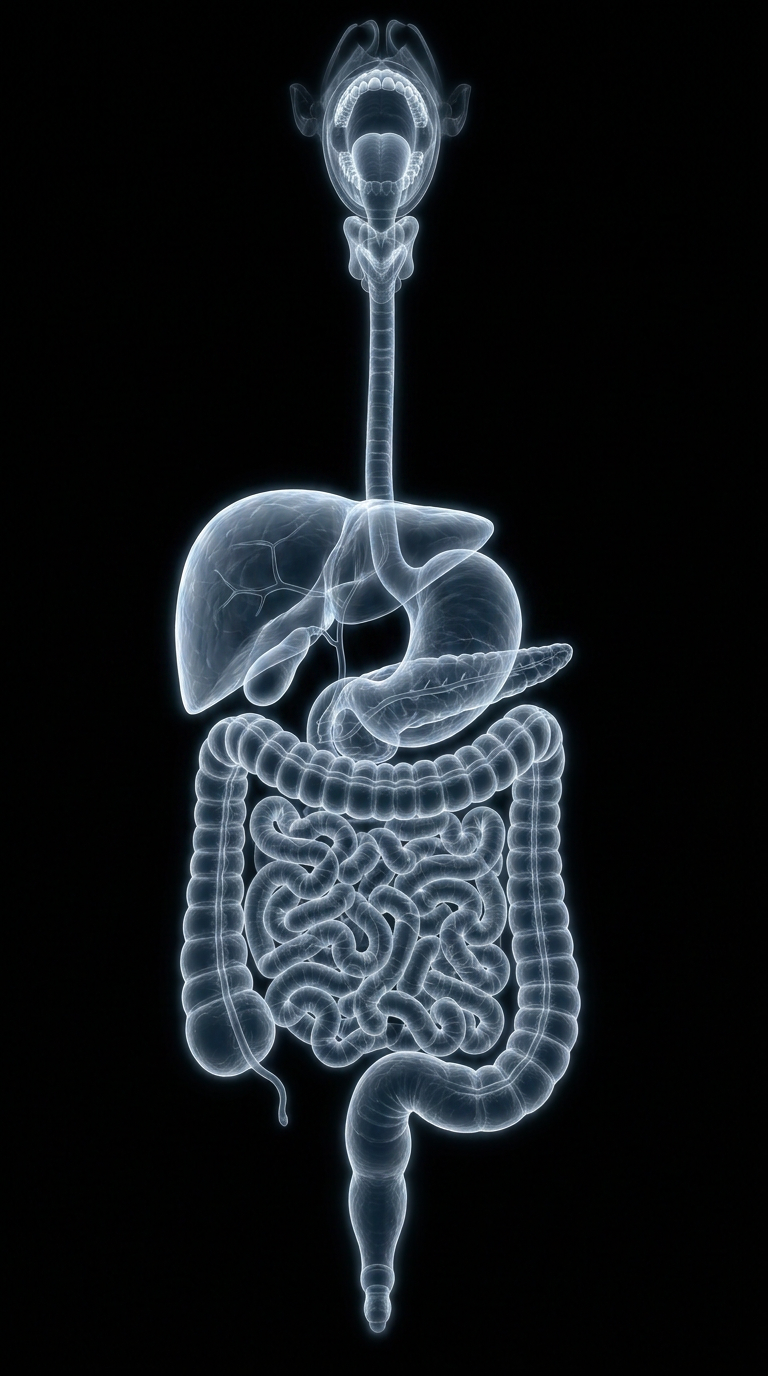
Small Intestine
Where most nutrient absorption happens across a vast folded surface, home to rare, varied cancers.
Quick facts
Rare
Under 1% of GI cancers
4
Distinct cancer types
6m
Length of the small bowel
Overview
- The small intestine connects the stomach to the colon and is where most nutrient absorption happens. Cancer here is rare compared to other GI cancers.
- Types include adenocarcinoma, carcinoid (neuroendocrine) tumors, lymphoma, and sarcoma, each behaving differently.
- Risk factors include Crohn's disease, celiac disease, certain inherited genetic syndromes (such as Lynch syndrome or familial adenomatous polyposis), and diets high in red or processed meats.
- A diagnosis means abnormal cells are found somewhere along the small intestine; because this cancer is uncommon and the small intestine is hard to visualize with standard exams, diagnosis sometimes takes longer.
01Risk factors
- Crohn's disease affecting the small bowel
- Celiac disease and long-standing malabsorption
- Inherited syndromes: Lynch, familial adenomatous polyposis
- Diet high in red or processed meats, low in fiber
- Prior radiation to the abdomen
02Signs & symptoms
- Abdominal pain or cramping, often after eating
- Unexplained weight loss
- Nausea and vomiting
- A lump in the abdomen
- Blood in the stool or dark, tarry stools
- Fatigue or weakness from anemia
- Diarrhea
- Yellowing of the skin or eyes (jaundice) in some cases
03Screening & diagnosis
- Capsule endoscopy to visualize the small bowel lining
- Balloon-assisted enteroscopy for biopsy
- CT or MR enterography to image the bowel wall
- Often found during workup for unexplained anemia or bleeding
04Treatment
- Surgical removal of the affected segment
- Chemotherapy depending on tumor type and stage
- Targeted therapy for neuroendocrine (carcinoid) tumors
- Radiation for select sarcomas or localized disease
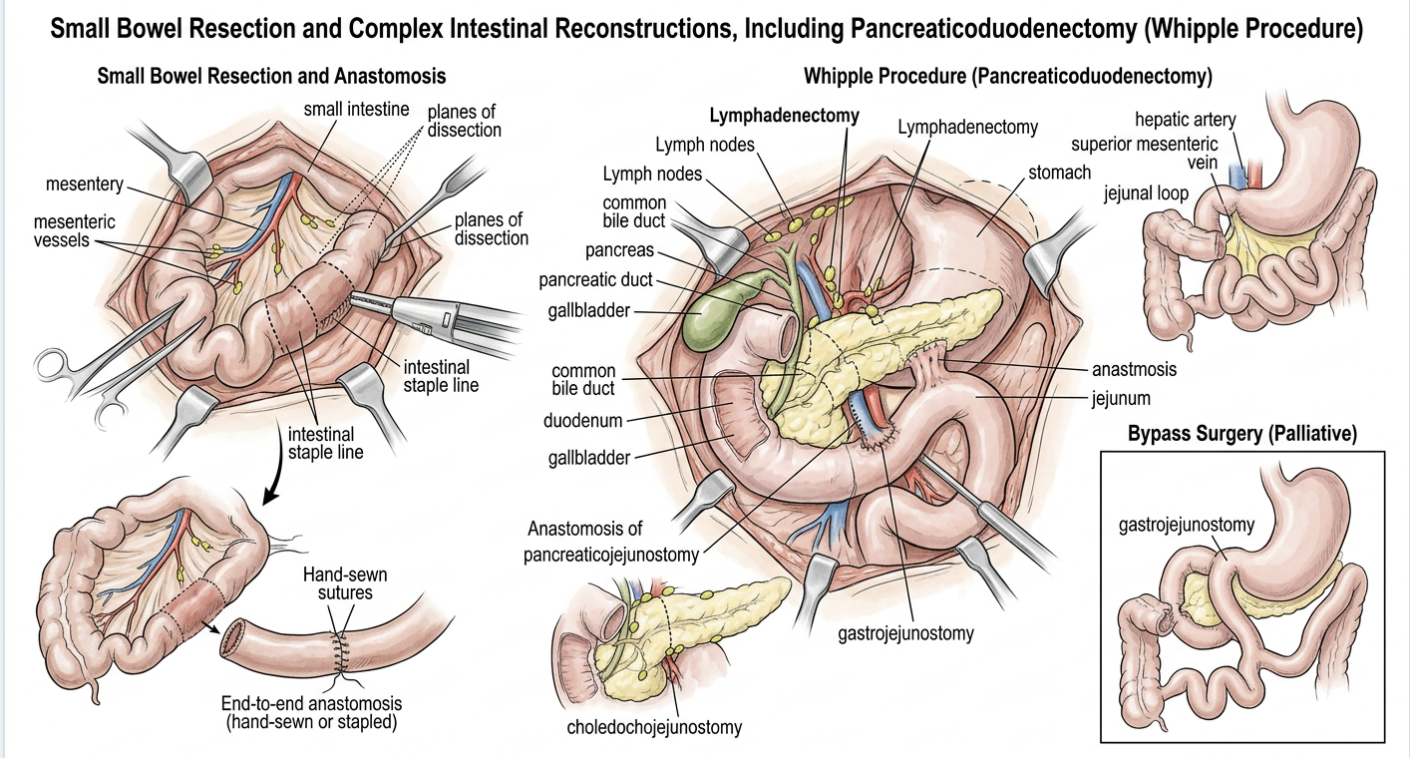
05Surgical procedures & operations
- Segmental Small Bowel Resection, removes the section of small intestine containing the tumor, with the healthy ends reconnected
- Pancreaticoduodenectomy (Whipple Procedure), used when the tumor is in the duodenum (first part of the small intestine) near the pancreas and bile duct
- Laparoscopic or Robotic-Assisted Small Bowel Resection, minimally invasive version of segmental resection
- Lymph Node Dissection, removal of nearby lymph nodes, typically performed with resection
- Small Bowel Bypass, reroutes the intestine around a blockage; typically palliative for unresectable tumors
- Enterostomy (Ostomy) Creation, diverts the bowel to the abdominal wall temporarily or permanently, sometimes needed depending on tumor location
06What you can do at home
- If you have Crohn's disease, celiac disease, or a known genetic syndrome, keep up with the monitoring schedule your doctor recommends
- Report persistent or unusual abdominal pain, especially if it's new or changing, to a doctor
- Track bowel habits and any blood in the stool
- Maintain a balanced diet and limit heavily processed and red meats
- Avoid tobacco and limit alcohol
- Know your family health history and share it with your doctor, since some small intestine cancers run in families
- Don't dismiss vague abdominal symptoms that persist for weeks, this cancer can be easy to miss, so timely medical evaluation matters
Research at GutLiv
GutLiv funds translational grants studying how the rare small-bowel cancer types differ biologically, so treatment can be tailored rather than borrowed from colon therapy.