Lab · 07
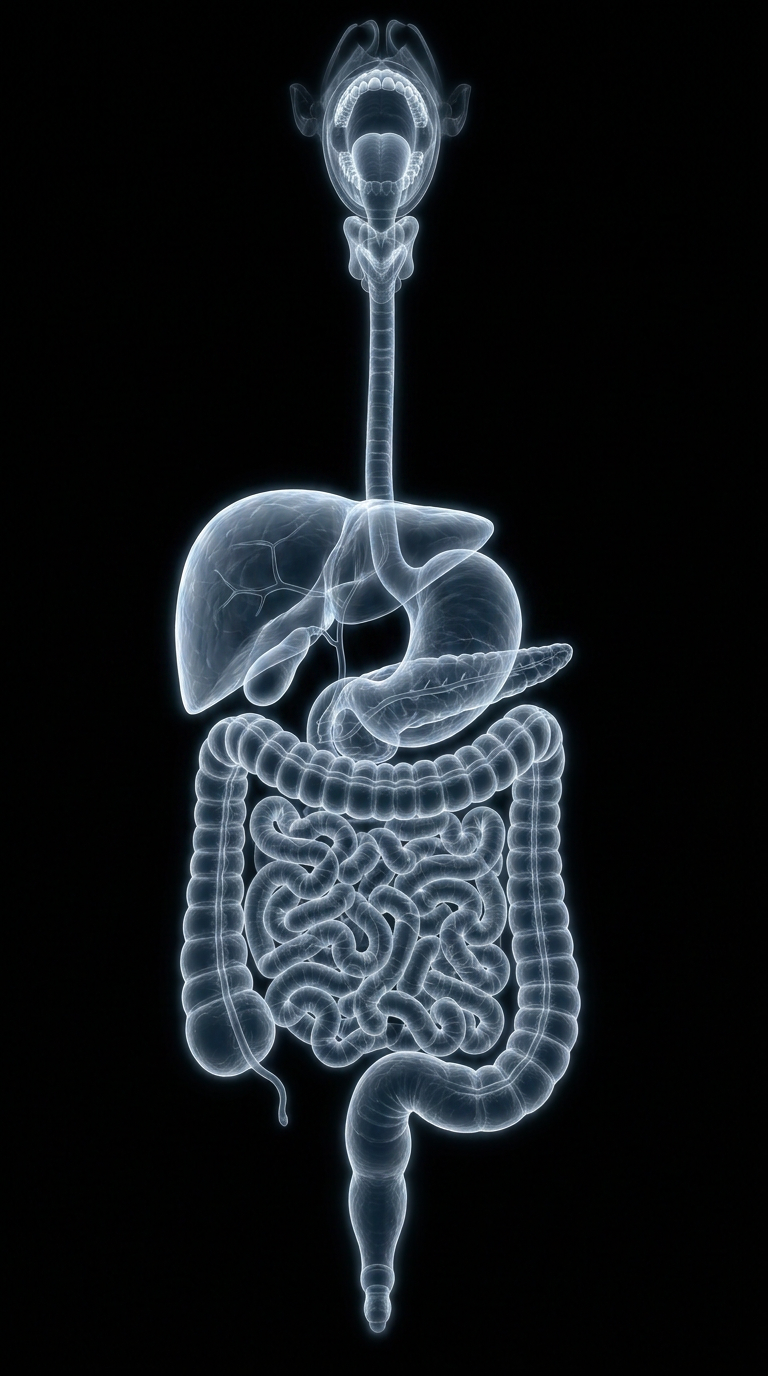
Large Intestine
The colon, where the most preventable cancer begins as a slow-growing polyp.
Quick facts
~50,000
New India cases yearly (est.)
Rising
Fastest-growing GI cancer in India
90%
Survival when caught early
Overview
- Colon cancer starts in the large intestine, usually beginning as a polyp (a small growth on the inner lining) that can develop into cancer over time.
- Most colon cancers are adenocarcinomas.
- Risk factors include age (risk rises after 45), family history, inflammatory bowel disease, a diet high in red/processed meat and low in fiber, obesity, inactivity, smoking, and heavy alcohol use.
- A diagnosis means a growth in the colon has become cancerous; because colon cancer usually develops slowly from polyps, routine screening can catch and remove polyps before they ever become cancer.
01Risk factors
- Age 45 and older, risk rises steadily
- Family history of colorectal cancer or polyps
- Inflammatory bowel disease (Crohn's, ulcerative colitis)
- Diet high in red/processed meat, low in fiber
- Obesity, inactivity, smoking, and heavy alcohol use
02Signs & symptoms
- A change in bowel habits (diarrhea, constipation, or narrower stools) lasting more than a few days
- Rectal bleeding or blood in the stool
- Persistent abdominal discomfort, cramps, or bloating
- A feeling that the bowel doesn't empty completely
- Unexplained weight loss
- Weakness or fatigue
- Iron-deficiency anemia found on blood tests
03Screening & diagnosis
- Colonoscopy, which can find and remove polyps in the same exam
- Stool-based tests (FIT, gFOBT) for hidden blood
- CT colonography as a non-invasive alternative
- Begin screening at age 45, earlier for higher-risk people
04Treatment
- Polyp removal during colonoscopy for early-stage disease
- Surgery to remove the affected colon segment
- Chemotherapy depending on stage
- Targeted therapy and immunotherapy for advanced cases
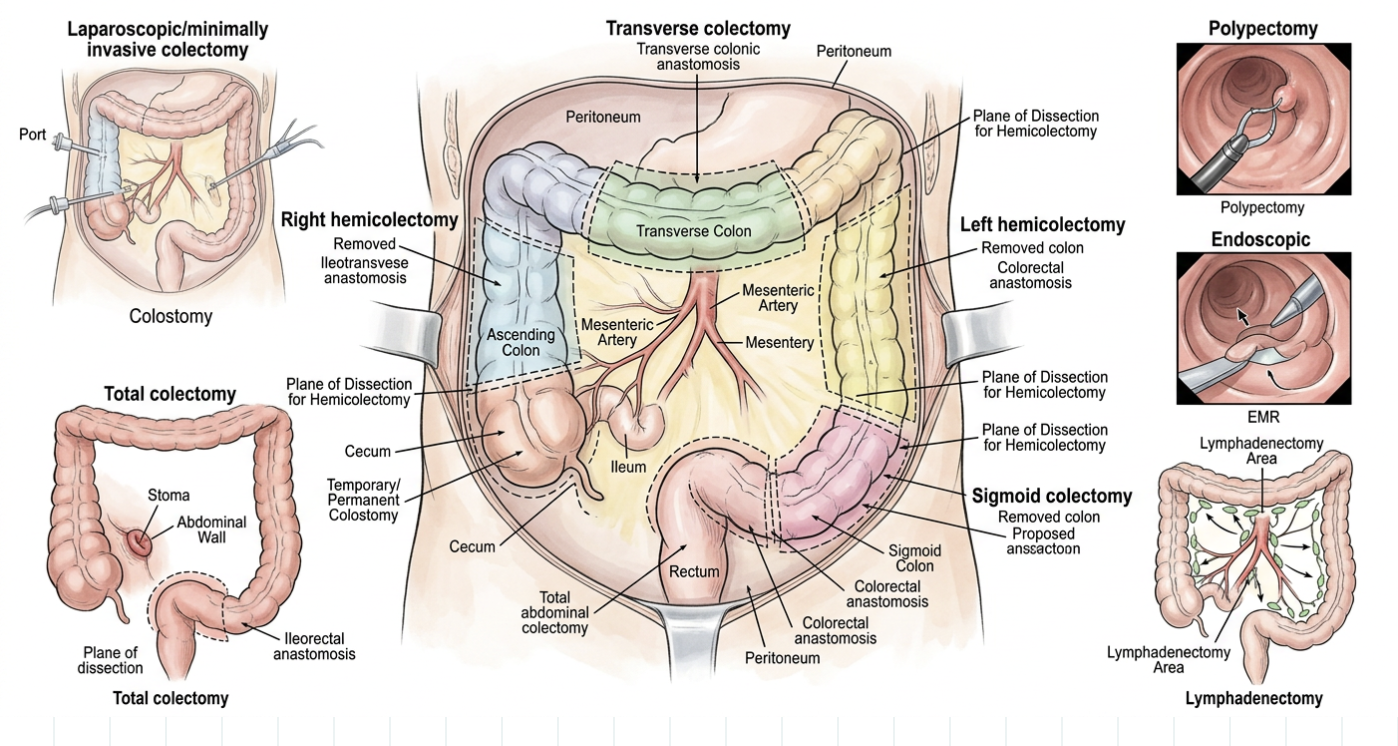
05Surgical procedures & operations
- Polypectomy, endoscopic removal of a polyp before or in very early stages of cancer
- Endoscopic Mucosal Resection (EMR), removes early, superficial tumors through a colonoscope
- Right Hemicolectomy, removes the right (ascending) side of the colon
- Extended Right Hemicolectomy, removes the right colon plus part of the transverse colon
- Transverse Colectomy, removes the transverse (middle) portion of the colon
- Left Hemicolectomy, removes the left (descending) side of the colon
- Sigmoid Colectomy, removes the sigmoid colon (lower left portion, near the rectum)
- Subtotal Colectomy, removes most of the colon, leaving a small portion
- Total Colectomy, removes the entire colon
- Laparoscopic or Robotic-Assisted Colectomy, minimally invasive versions of the above resections
- Lymph Node Dissection, removal of nearby lymph nodes, performed with resection
- Colostomy, creates an opening connecting the colon to the abdominal wall; may be temporary or permanent depending on the procedure
- Colonic Stenting, places an expandable tube to relieve a blockage; typically palliative
06What you can do at home
- Start regular colon cancer screening at age 45 (or earlier with family history or symptoms), this is one of the most effective cancer prevention tools available, since it can catch and remove polyps before they become cancerous
- Eat a diet rich in fiber, fruits, and vegetables; limit red and processed meats
- Stay physically active and maintain a healthy weight
- Avoid tobacco and limit alcohol
- Track any changes in bowel habits or blood in the stool and report them to a doctor promptly
- Know your family history, if a close relative had colon cancer or polyps, ask your doctor about starting screening earlier
- Stay hydrated and manage chronic constipation with your doctor's guidance rather than ignoring it
Research at GutLiv
GutLiv's outreach arm works to close the screening gap, particularly in communities where late-stage diagnosis is most common, by funding mobile screening and awareness campaigns.