Lab · 08
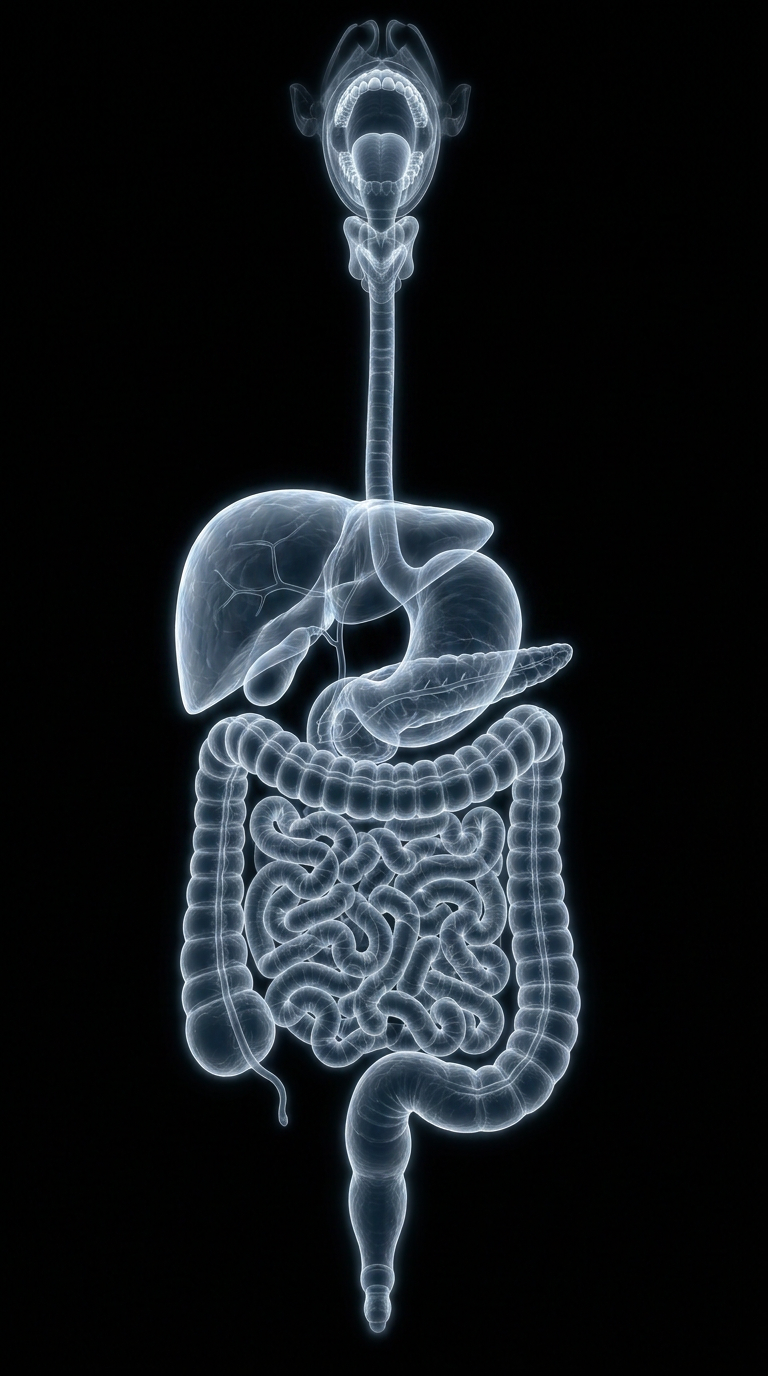
Rectum
The final stretch of the large intestine, grouped with colon cancer, but treated differently.
Quick facts
~25,000
New India rectal cases yearly (est.)
45+
Age risk begins to rise
Rising
In younger Indian adults
Overview
- The rectum is the final several inches of the large intestine, connecting the colon to the anus. Rectal cancer is often grouped with colon cancer as "colorectal cancer" because they share many risk factors and screening methods, but treatment can differ due to the rectum's location in the pelvis.
- Like colon cancer, most rectal cancers start as polyps that slowly become cancerous over time.
- A diagnosis means a growth in the rectal lining has become cancerous; because the rectum sits close to other pelvic structures, treatment planning often involves a specialized team.
01Risk factors
- Age 45 and older
- Personal or family history of colorectal polyps or cancer
- Inflammatory bowel disease
- Diets high in red/processed meat, low in fiber
- Smoking, obesity, and heavy alcohol use
02Signs & symptoms
- Rectal bleeding or blood in the stool
- A change in bowel habits, including diarrhea, constipation, or narrower stools
- A feeling of incomplete emptying after a bowel movement
- Abdominal or rectal pain
- Unexplained weight loss
- Fatigue or weakness
- A change in stool consistency lasting several weeks
03Screening & diagnosis
- Colonoscopy to visualize the rectum and remove polyps
- Rigid or flexible sigmoidoscopy focused on the lower bowel
- MRI to stage rectal tumors and assess the surrounding tissue
- Begin at age 45, earlier for higher-risk individuals
04Treatment
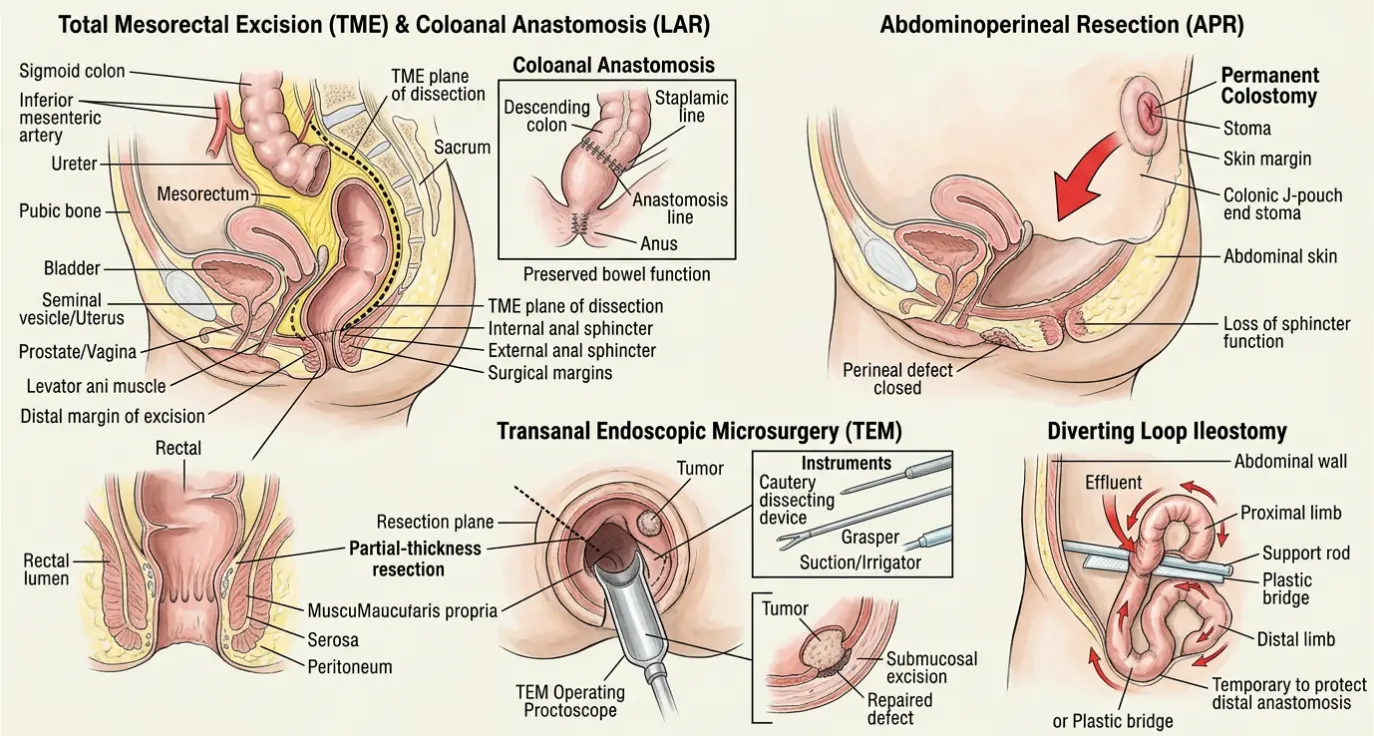
- Surgery (low anterior resection or abdominoperineal resection)
- Chemoradiation before surgery to shrink the tumor
- Total neoadjuvant therapy for advanced local disease
- Organ-preserving approaches (watch-and-wait) after strong response
05Surgical procedures & operations
- Transanal Excision, removes small, early-stage tumors through the anus without abdominal incisions
- Transanal Endoscopic Microsurgery (TEM) / Transanal Minimally Invasive Surgery (TAMIS), specialized endoscopic techniques for removing early rectal tumors through the anus
- Low Anterior Resection (LAR), removes the tumor-containing section of the rectum while preserving the anus, with the colon reconnected to the remaining rectum
- Total Mesorectal Excision (TME), a technique of carefully removing the rectum along with its surrounding fatty tissue and lymph nodes envelope; typically performed as part of LAR or APR
- Abdominoperineal Resection (APR), removes the rectum and anus together, requiring a permanent colostomy
- Hartmann's Procedure, removes the diseased section of the rectum/sigmoid colon, closes off the rectal stump, and creates a temporary or permanent colostomy
- Pelvic Exenteration, a more extensive operation removing the rectum and nearby pelvic organs, used for advanced or recurrent cases
- Laparoscopic or Robotic-Assisted Rectal Resection, minimally invasive versions of LAR or APR
- Diverting Ileostomy or Colostomy, a temporary ostomy created to protect a new bowel connection while it heals
06What you can do at home
- Get screened starting at age 45 (or earlier if you have risk factors); screening can detect and remove precancerous polyps in the rectum, just as with the colon
- Eat a high-fiber diet with plenty of fruits and vegetables; limit red and processed meats
- Stay active and maintain a healthy weight
- Avoid tobacco and limit alcohol
- Don't ignore rectal bleeding, even if you think it's from hemorrhoids, have it checked by a doctor to rule out other causes
- Track changes in bowel habits and stool shape/consistency over several weeks and report persistent changes
- Know your family history, especially of colorectal cancer or polyps, and discuss it with your doctor
Research at GutLiv
GutLiv supports trials of organ-preserving therapy, treating rectal cancer without surgery when tumors respond fully, to spare patients life-altering surgery.