Lab · 03
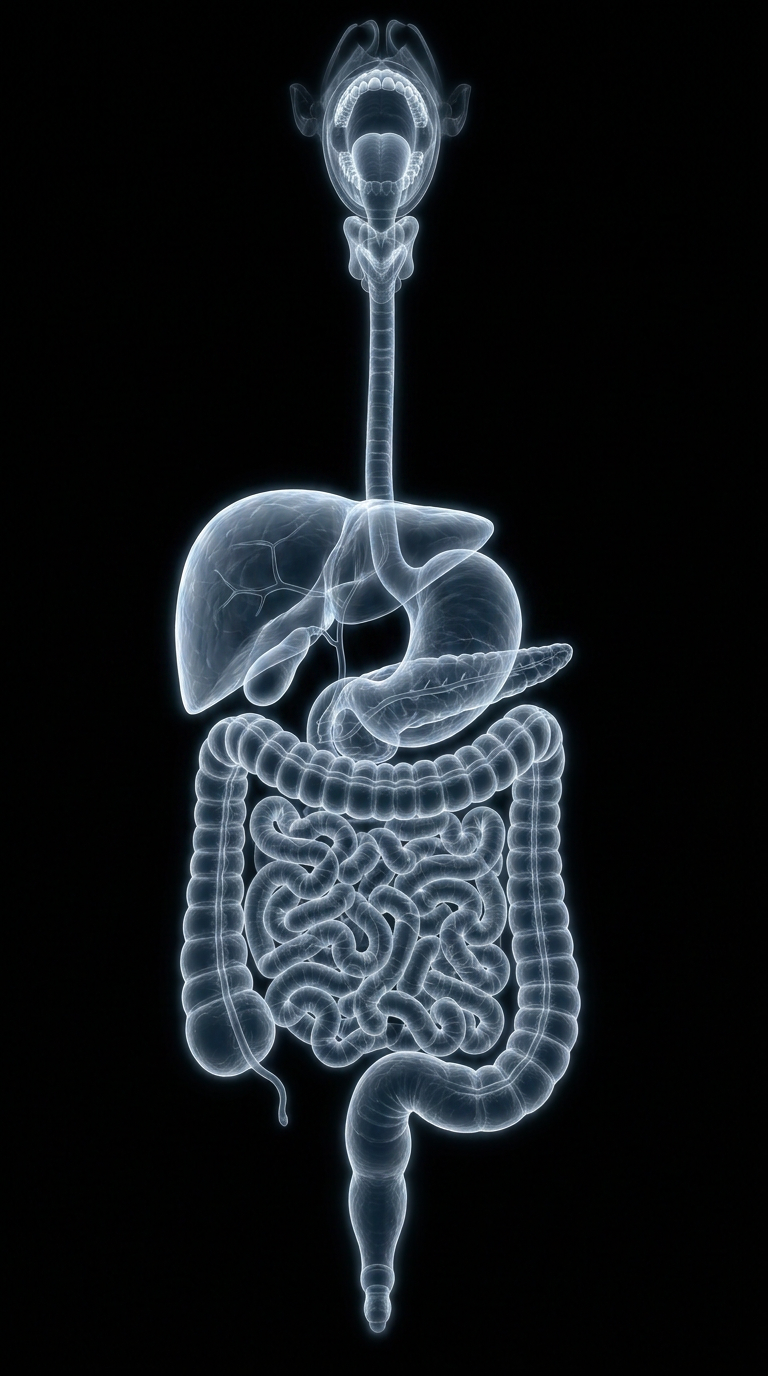
Liver
The body's largest internal organ, filtering every drop of blood leaving the gut.
Quick facts
~40,000
New India cases yearly (est.)
Hep B
Leading driver in India
Rising
With fatty liver & alcohol use
Overview
- Liver cancer most often develops as hepatocellular carcinoma, which starts in the main type of liver cell, usually in a liver already damaged by long-term disease.
- Major risk factors include chronic hepatitis B or C infection, cirrhosis (liver scarring from any cause), heavy long-term alcohol use, non-alcoholic fatty liver disease, obesity, diabetes, and exposure to certain toxins (like aflatoxins from contaminated food).
- A diagnosis means cancerous cells are growing in the liver; because liver cancer often develops on top of existing liver disease, people with known cirrhosis or hepatitis are usually monitored closely so it can be found earlier, when treatment options are best.
01Risk factors
- Chronic hepatitis B or C infection
- Cirrhosis from any cause (alcohol, viral, fatty liver)
- Non-alcoholic fatty liver disease (NAFLD/MASH)
- Heavy long-term alcohol consumption
- Type 2 diabetes and obesity
02Signs & symptoms
- Unintentional weight loss
- Loss of appetite
- Upper abdominal pain, especially on the right side, or pain near the right shoulder blade
- Nausea and vomiting
- General weakness and fatigue
- Abdominal swelling (from fluid buildup)
- Yellowing of the skin or eyes (jaundice)
- Pale, chalky stools and dark urine
- Easy bruising or bleeding
03Screening & diagnosis
- Regular ultrasound, with or without AFP blood test, for people with cirrhosis or chronic hepatitis
- MRI or CT to confirm and characterize a liver mass
- Biopsy when imaging is inconclusive
- Surveillance every six months for high-risk patients
04Treatment
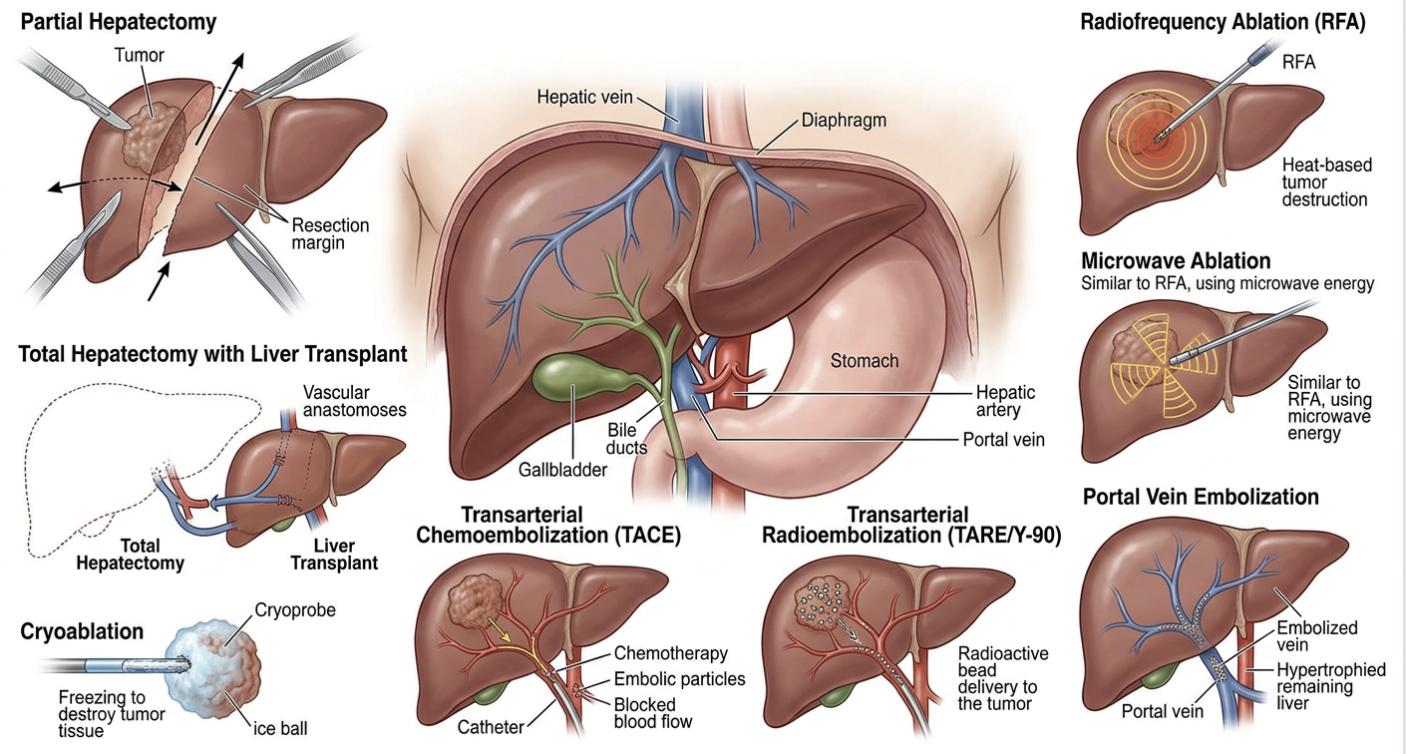
- Surgical removal (resection) of the tumor
- Liver transplant for select patients
- Ablation or embolization (e.g., TACE) for tumors not removable by surgery
- Targeted therapy and immunotherapy for advanced disease
05Surgical procedures & operations
- Wedge Resection, removes a small, localized section of the liver containing the tumor
- Segmentectomy, removes one of the liver's anatomical segments
- Partial Hepatectomy (Lobectomy), removes a larger lobe of the liver (left or right hepatectomy)
- Extended Hepatectomy (Trisegmentectomy), removes a lobe plus part of the adjoining segment, for larger tumors
- Laparoscopic or Robotic-Assisted Liver Resection, minimally invasive versions of the above resections
- Liver Transplant, replaces the entire diseased liver with a healthy donor liver; used in select cases, particularly with small tumors and underlying cirrhosis
- Radiofrequency Ablation (RFA), uses heat generated by radio waves to destroy tumor tissue; often used for smaller tumors or when surgery isn't an option
- Microwave Ablation (MWA), similar to RFA, using microwave energy to destroy tumor tissue
- Cryoablation, uses extreme cold to destroy tumor tissue
- Transarterial Chemoembolization (TACE), a minimally invasive procedure that delivers chemotherapy directly to the tumor while blocking its blood supply; not surgery in the traditional sense, but a common liver-directed procedure
- Portal Vein Embolization, a procedure sometimes performed before major liver surgery to help the remaining liver grow larger and function adequately after resection
06What you can do at home
- Get vaccinated against hepatitis B if you haven't already, and ask your doctor about testing for hepatitis B and C, especially if you have risk factors
- Limit alcohol intake: heavy, long-term drinking is one of the most preventable liver cancer risk factors
- Maintain a healthy weight and manage diabetes, since fatty liver disease is an increasing driver of liver cancer
- If you have hepatitis B, hepatitis C, or cirrhosis, keep up with the liver monitoring (such as regular ultrasounds and blood tests) your doctor recommends, this is the main way liver cancer is caught early
- Avoid unnecessary use of anabolic steroids or unregulated supplements that can strain the liver
- Store grains and nuts properly and avoid moldy food, which can carry liver-toxic contaminants
- Report new abdominal pain, swelling, or yellowing of the skin/eyes to a doctor promptly
Research at GutLiv
GutLiv underwrites hepatitis vaccination outreach and studies surveillance scheduling to catch hepatocellular carcinoma at its earliest, most treatable stage in cirrhotic patients.