Lab · 02
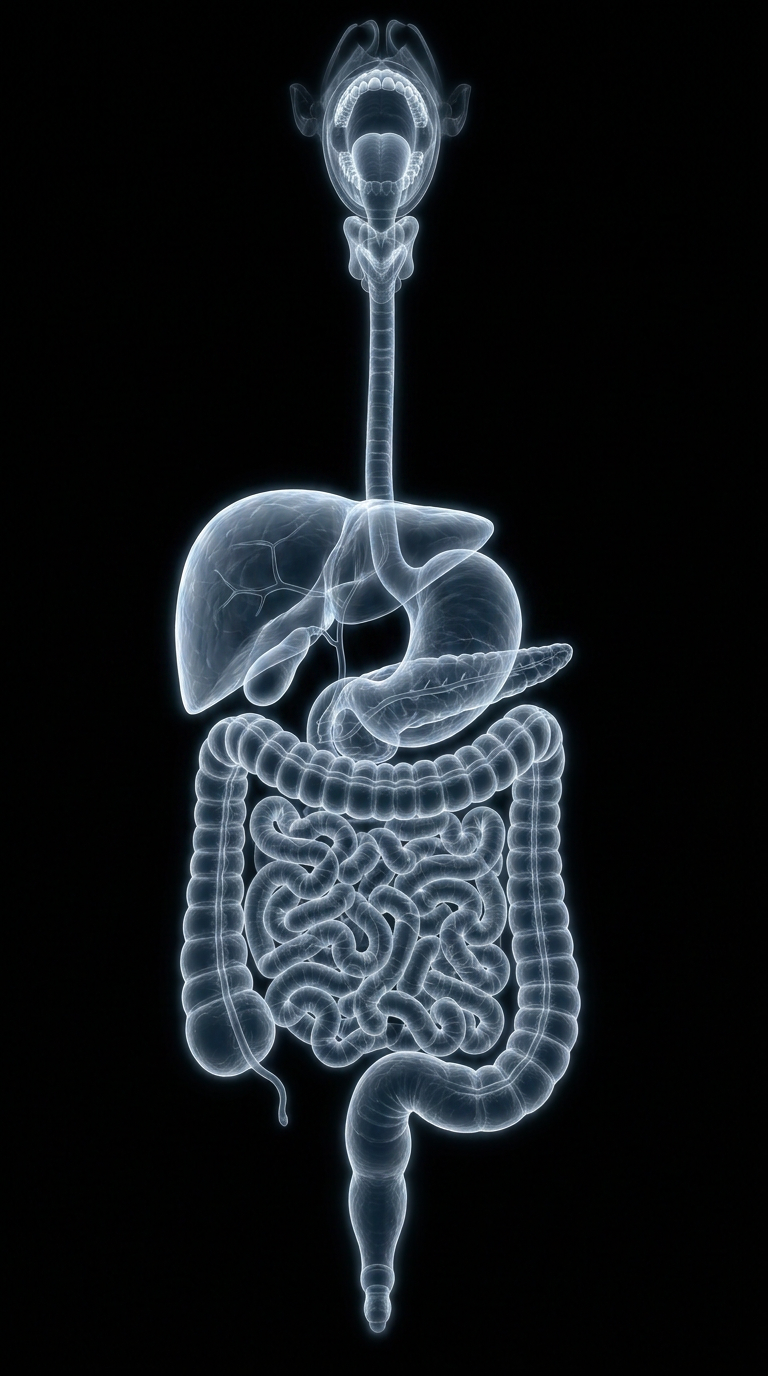
Stomach
An acid-lined organ that reshapes food into chyme, and a cancer that is often found late.
Quick facts
~35,000
New India cases yearly (est.)
H. pylori
Present in many cases
South & NE
Higher burden in southern & NE India
Overview
- Stomach cancer develops in the lining of the stomach, most commonly as adenocarcinoma.
- It is often linked to chronic infection with H. pylori bacteria, long-term stomach inflammation (gastritis), diet high in smoked/salted/pickled foods, smoking, and family history.
- A diagnosis means abnormal cells are present in the stomach lining; because early symptoms can resemble common digestive issues, stomach cancer is sometimes diagnosed after it has grown or spread.
01Risk factors
- Chronic Helicobacter pylori infection of the stomach
- Long-term gastritis or gastric ulcers
- Diet high in smoked, salted, and pickled foods; low fresh produce
- Smoking and heavy alcohol use
- Family history of stomach cancer or inherited syndromes
02Signs & symptoms
- Persistent indigestion or stomach discomfort
- Feeling full after eating only a small amount
- Nausea or vomiting
- Unintentional weight loss
- Loss of appetite
- Bloating after meals
- Heartburn
- Blood in vomit or dark, tarry stools
- Fatigue or weakness (from anemia)
03Screening & diagnosis
- Upper endoscopy (EGD) to inspect the stomach lining and biopsy
- Imaging such as CT or barium swallow to assess spread
- Endoscopic ultrasound to measure tumor depth
- Testing for and treating H. pylori in high-risk populations
04Treatment
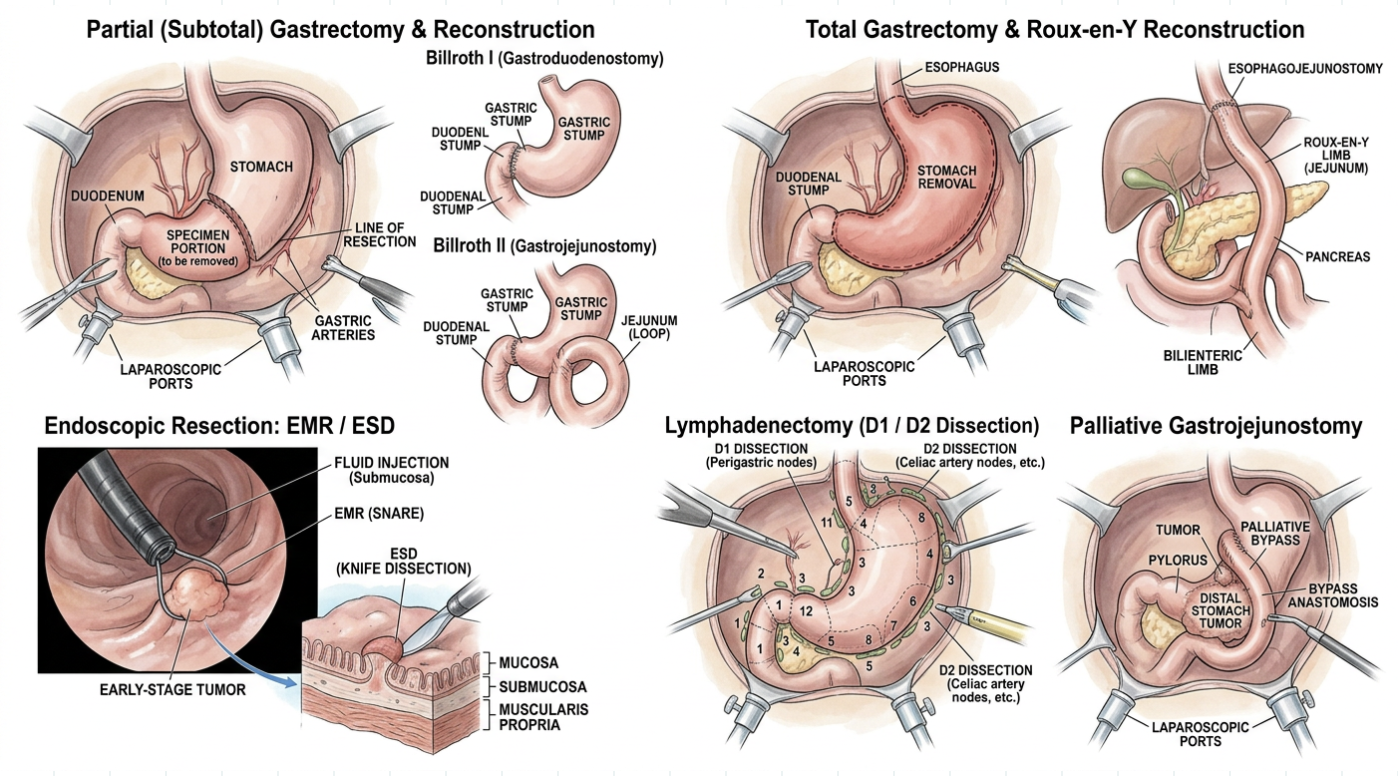
- Surgery (gastrectomy) to remove the tumor and nearby lymph nodes
- Chemotherapy, often given before or after surgery
- Radiation therapy combined with chemo
- Targeted drugs for HER2-positive tumors and immunotherapy for select cases
05Surgical procedures & operations
- Endoscopic Mucosal Resection (EMR), removes very early, superficial tumors through an endoscope
- Endoscopic Submucosal Dissection (ESD), removes larger superficial tumors endoscopically
- Subtotal (Partial) Gastrectomy, removes the portion of the stomach containing the tumor, most often used for tumors in the lower stomach
- Distal Gastrectomy, removes the lower part of the stomach
- Proximal Gastrectomy, removes the upper part of the stomach, near the esophagus
- Total Gastrectomy, removes the entire stomach, with the esophagus connected directly to the small intestine
- Wedge Resection, removes a small, localized section of the stomach wall, typically for smaller or non-invasive tumors
- Laparoscopic or Robotic-Assisted Gastrectomy, minimally invasive versions of subtotal or total gastrectomy
- Lymphadenectomy (D1 or D2 Lymph Node Dissection), removal of nearby lymph nodes, performed alongside gastrectomy
- Gastrojejunostomy (Bypass), reroutes food around a blocked area of the stomach; typically palliative for unresectable tumors
- Feeding Jejunostomy Tube Placement, supportive procedure for nutrition during treatment
06What you can do at home
- Ask your doctor about testing and treatment for H. pylori infection if you have chronic stomach symptoms
- Limit intake of smoked, salted, pickled, and processed foods; eat more fresh fruits and vegetables
- Avoid tobacco and limit alcohol
- Maintain a healthy weight and stay physically active
- Store and refrigerate food properly to reduce exposure to certain food-related toxins
- Track persistent digestive symptoms (more than 2 weeks), such as indigestion, early fullness, or unexplained weight loss, and report them to a doctor
- If you have a family history of stomach cancer, ask your doctor whether earlier or more frequent screening is appropriate for you
Research at GutLiv
GutLiv supports H. pylori eradication campaigns in high-burden regions and trials exploring blood-based early-detection markers that could flag stomach cancer before symptoms appear.